English
 русский
Industry News
Yes — all-in-one residential energy storage systems are safe to use when they are certified to relevant international standards, correctly installed, and maintained according to manufacturer guidelines. Modern all-in-one residential energy storage systems integrate battery cells, battery management systems (BMS), inverters, and thermal management into a single enclosure specifically engineered for domestic environments. When these systems meet certifications such as UL 9540, IEC 62619, UN 38.3, and CE marking, the risk of fire, electrical fault, or chemical hazard under normal operating conditions is extremely low. The key variables are the battery chemistry selected, the quality of the BMS, the installation environment, and whether the system was installed by a qualified professional. This article examines each of these factors in detail so homeowners can make genuinely informed safety assessments.
What Makes an All-in-One System Different from Separate Component Setups
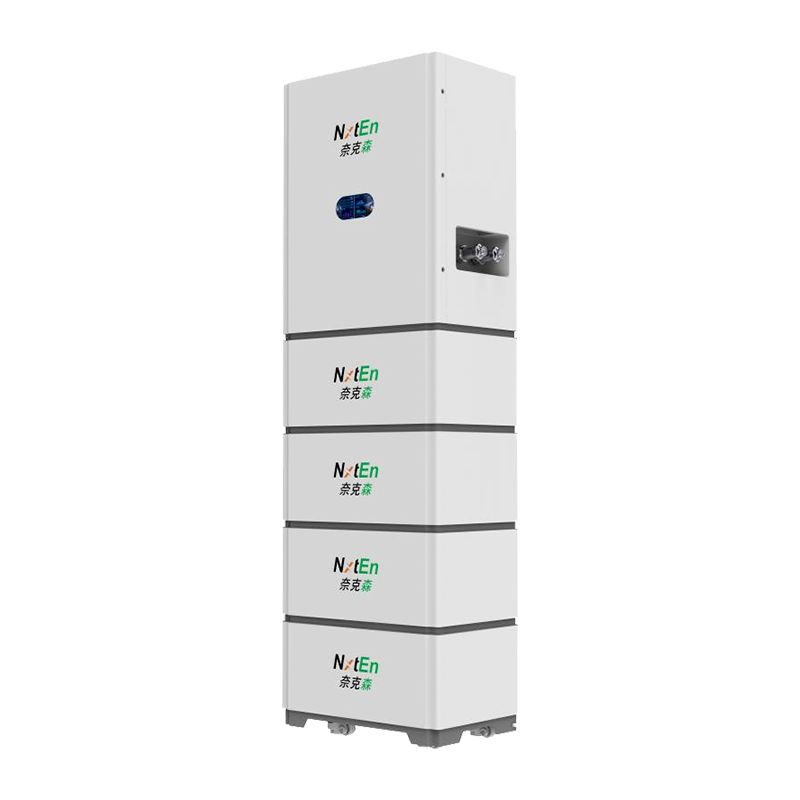
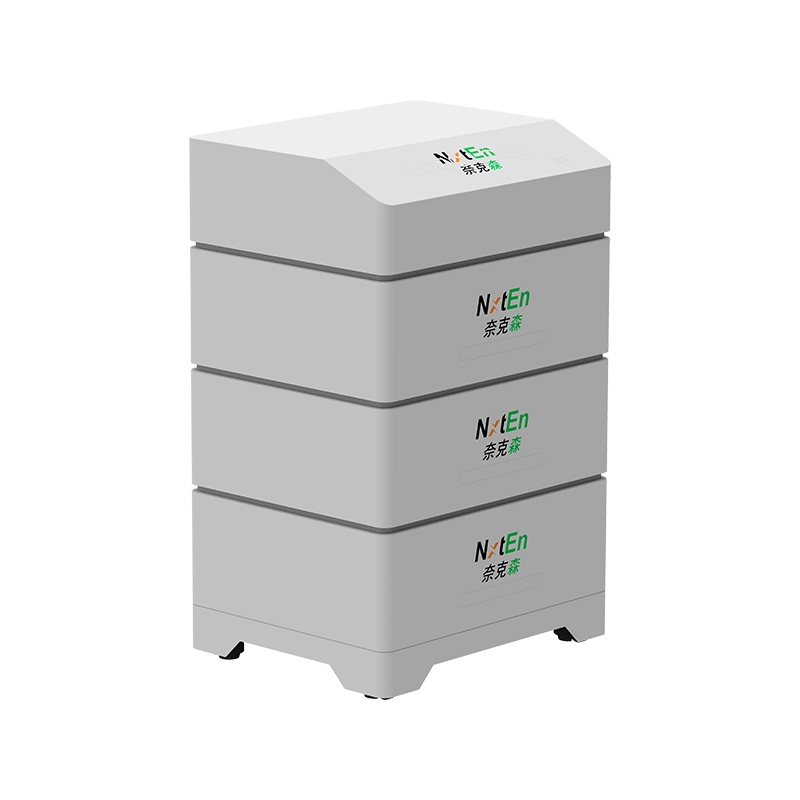
A compact residential energy storage system in all-in-one format combines components that, in earlier installations, were specified and installed separately — often by different contractors with varying levels of system integration expertise. This integration shift has meaningful safety implications:
- Factory-tested as a complete system: All-in-one units are tested as an integrated assembly before leaving the factory. Separate-component systems are assembled on-site, where installation errors — mismatched communication protocols between battery and inverter, incorrect fusing, or inadequate cabling — introduce risks that factory integration eliminates.
- Pre-configured BMS-inverter communication: In an all-in-one system, the battery management system communicates directly with the inverter through a validated internal protocol. This means the inverter will respond correctly to BMS protection signals — reducing charge current when cells approach temperature limits, cutting output during fault conditions — in ways that field-assembled systems may not achieve reliably.
- Single enclosure reduces external wiring hazards: High-current DC cabling between separate battery banks and inverters in multi-component installations is a known installation risk. The all-in-one format eliminates most of this external high-voltage DC wiring, reducing both installer error risk and long-term cable degradation risk.
- Designed for non-specialist installation environments: A dedicated villa balcony energy storage unit or wall-mounted all-in-one system is physically designed for placement in the living spaces of residential buildings — with enclosure ratings, thermal management, and noise specifications that reflect this context.
Battery Chemistry: The Foundation of Safety Performance
The single most important safety variable in any residential energy storage system is the battery chemistry. Not all lithium-ion batteries are equivalent in safety profile, and understanding the difference is essential for homeowners evaluating an all-in-one residential energy storage system.
Lithium Iron Phosphate (LFP) — The Preferred Chemistry for Residential Use
Lithium iron phosphate (LiFePO₄, commonly abbreviated LFP) has become the dominant chemistry in residential energy storage for well-founded safety reasons. LFP cells have a thermal runaway onset temperature of approximately 270°C (518°F) — substantially higher than the 150–200°C (302–392°F) threshold of NMC (nickel manganese cobalt) cells. When LFP cells do fail thermally, they release significantly less heat and do not produce the self-propagating exothermic reaction that makes NMC thermal runaway difficult to contain.
Additional LFP advantages for residential applications include a cycle life of 3,000 to 6,000 charge-discharge cycles at 80% depth of discharge — equivalent to 10 to 20 years of daily cycling — and no cobalt content, which eliminates concerns about supply chain ethics and cobalt-related degradation mechanisms.
NMC Chemistry — Higher Energy Density, Higher Risk Profile
NMC batteries offer higher energy density than LFP — useful for compact residential systems where physical footprint is constrained — but require more sophisticated thermal management and tighter BMS oversight to maintain safety. NMC-based residential systems are not inherently unsafe, but they demand higher-quality BMS implementation and more careful installation environment assessment. For villa balcony energy storage or any installation in an enclosed residential space, LFP chemistry represents the lower-risk specification unless specific space constraints make NMC's higher energy density a functional requirement.
Battery Chemistry Safety Comparison
| Property | LFP (LiFePO₄) | NMC | Lead-Acid |
|---|---|---|---|
| Thermal Runaway Onset | ~270°C | 150–200°C | N/A (different failure mode) |
| Cycle Life (80% DoD) | 3,000–6,000 cycles | 1,000–2,000 cycles | 200–500 cycles |
| Energy Density | Moderate | High | Low |
| Residential Suitability | Excellent | Good (with strong BMS) | Limited |
| Off-Gassing Risk | Very Low | Low (normal operation) | Hydrogen gas possible |
The Battery Management System: Why It Is the Real Safety Guarantee
A lithium battery cell on its own has no inherent safety intelligence. The battery management system (BMS) is the active protection layer that keeps every cell in the pack operating within its safe limits at all times. In a high-quality all-in-one residential energy storage system, the BMS monitors and controls:
- Cell voltage monitoring: Individual cell voltages are monitored continuously. If any cell reaches the over-voltage limit (typically 3.65V for LFP) or under-voltage limit (typically 2.5V for LFP), the BMS disconnects the circuit before damage or safety risk can occur.
- Temperature monitoring: Temperature sensors distributed throughout the cell stack detect local hotspots. Most quality BMS systems begin reducing charge or discharge current when cell temperatures exceed 45°C, and disconnect completely above 55–60°C.
- State of charge (SoC) balancing: Active or passive cell balancing prevents any individual cell from becoming overcharged relative to its neighbors during charging — the most common cause of early cell failure and elevated thermal risk.
- Short circuit and overcurrent protection: Hardware-level fusing combined with BMS logic disconnects the battery within milliseconds of detecting an overcurrent event.
- Communication with the inverter: In a well-integrated all-in-one system, the BMS communicates battery state to the inverter via CAN bus or RS485, allowing the inverter to dynamically adjust charge rates based on actual cell conditions rather than fixed parameters.
The quality differentiation between residential storage systems lies largely in BMS sophistication. Entry-level systems may use a single-point temperature sensor for the entire pack — missing local hotspots. High-quality systems use multi-point sensing with individual cell-level monitoring, representing a meaningful safety gap between product tiers.
Safety Standards and Certifications — What to Look For
Certifications are the most reliable objective evidence that an all-in-one residential energy storage system has been tested by an independent third party against defined safety benchmarks. The following certifications are the most relevant for residential energy storage:
- UL 9540 (USA/Canada): The primary standard for energy storage system safety in North America. Covers the complete installed system including batteries, inverter, and enclosure. A UL 9540 listing is typically required by local building and fire codes for residential installations in North America.
- IEC 62619: The international standard for safety requirements of secondary lithium cells and batteries for use in stationary applications — directly applicable to residential storage battery packs.
- UN 38.3: The United Nations transportation testing standard for lithium batteries, covering vibration, shock, temperature cycling, and short-circuit resistance. Required for shipping, but also indicative of basic cell-level robustness.
- CE Marking (Europe): Confirms compliance with applicable EU directives including the Low Voltage Directive and EMC Directive. Required for sale in European markets.
- IP Rating: For villa balcony energy storage or any outdoor-facing installation, an IP65 rating (dust-tight, water jet resistant) is the minimum appropriate specification. Indoor installations in conditioned spaces may accept IP55.
Residential Energy Storage Safety Incident Rate Over Time
As battery chemistry has improved and BMS technology has matured, the safety incident rate for residential energy storage systems has declined significantly. The chart below illustrates the trend in reported safety incidents per 10,000 installed residential systems across a 10-year period as the industry has standardized around LFP chemistry and certified BMS systems.
Figure 1: Illustrative trend in residential energy storage safety incidents by system certification status — certified LFP systems show substantially lower incident rates (model based on industry safety reporting data)
Installation Requirements That Directly Affect Safety
Even a fully certified compact residential energy storage system can present risks if installed incorrectly or in an unsuitable environment. These installation factors have direct safety implications:
Ventilation and Thermal Environment
Lithium battery performance and longevity are significantly affected by ambient temperature. Most residential storage systems are rated for operation between 0°C and 45°C (32°F to 113°F). Installation in spaces that regularly exceed this range — uninsulated attics, south-facing enclosed balconies without shading in hot climates, or garages in desert regions — reduces both safety margin and cycle life. Maintain a minimum clearance of 20 cm on all sides of an all-in-one unit to allow adequate heat dissipation. Do not install adjacent to heat-generating appliances, water heaters, or in direct sunlight.
Wall Mounting and Structural Adequacy
A standard 10 kWh all-in-one residential storage unit weighs between 80 and 130 kg depending on battery chemistry and enclosure design. Wall mounting requires fixings into structural masonry or timber framing — never into drywall or plaster alone. Verify wall load capacity before installation and use manufacturer-specified mounting hardware with appropriate fastener shear ratings. Floor-standing units in seismically active regions should be secured to the wall or floor with anti-topple restraints.
Electrical Connection and Protection Device Sizing
The AC connection from the storage system to the home's electrical panel must be protected by a correctly sized circuit breaker — not a generic breaker of convenient rating. Oversized breakers fail to protect the cabling between the breaker and the unit during fault conditions. The installer should specify the breaker rating based on the unit's maximum output current, the cable cross-section installed, and any applicable local wiring standards (NEC in the USA, BS 7671 in the UK, or equivalent).
Installation by Qualified Personnel
In most jurisdictions, installation of a grid-connected residential energy storage system must be performed by a licensed electrician, and the installation must be notified to or inspected by the local network operator or building authority. Self-installation of grid-connected systems is illegal in many countries and voids both product warranty and insurance coverage. For villa balcony energy storage units intended for off-grid or plug-in operation, regulatory requirements vary — verify local rules before purchasing.
Safety Checklist: What to Verify Before and After Installation
| Check Category | What to Verify | Stage |
|---|---|---|
| Certification | UL 9540 / IEC 62619 / CE present on spec sheet | Before purchase |
| Battery Chemistry | Confirm LFP or verify NMC thermal management spec | Before purchase |
| Installation Location | Ambient temp 0–45°C, min 20cm clearance, no direct sun | Pre-installation |
| Structural Support | Wall / floor rated for unit weight (80–130 kg typical) | Pre-installation |
| Electrical Protection | Correctly rated breaker, appropriate cable cross-section | Installation |
| Regulatory Compliance | Grid-connection notification / permit filed where required | Installation |
| Operational Monitoring | App / display shows no persistent alarms after commissioning | Post-installation |
| Annual Inspection | Electrical connections checked, firmware updated, SoH reviewed | Ongoing |
Special Considerations for Villa Balcony and Outdoor Installations
Villa balcony energy storage installations are increasingly popular as a way to add storage capacity to apartments and villas without requiring access to a garage or utility room. Balcony-mounted units face distinct environmental challenges that affect safety specification:
- Weather exposure: Balcony units must have a minimum IP65 rating for all external surfaces. Verify that cable entry points are also sealed to IP65 — it is common for the enclosure to be rated IP65 but cable glands to be installed without equivalent sealing, creating water ingress paths.
- UV degradation: Direct sunlight exposure degrades enclosure plastics and cable insulation over time. Select units with UV-stabilized enclosures, and ensure cables from the unit to the internal connection point are rated for outdoor UV exposure (typically marked as UV-resistant or outdoor-rated on the cable jacket).
- Structural load on balcony slab: A 10 kWh unit at 100 kg concentrated on a small balcony footprint represents a significant point load. Verify with a structural engineer that the balcony slab and its supports can carry this load before installation, particularly on older buildings or balconies not originally designed for heavy equipment.
- Building regulations and strata approval: In multi-dwelling buildings, installation of a balcony energy storage unit may require approval from the building owner, body corporate, or strata committee. Check building regulations and lease or strata title conditions before purchasing.
Frequently Asked Questions
Q1Can a residential energy storage system catch fire under normal operating conditions? +
With a certified LFP-based all-in-one residential energy storage system operating within its design parameters, the risk of fire is extremely low — comparable to the risk from other major household appliances. LFP cells have a thermal runaway onset temperature approximately 70–120°C higher than NMC cells, and a well-functioning BMS prevents cells from approaching this threshold under any normal operating scenario. Fires in residential storage systems have almost exclusively occurred in systems that were uncertified, improperly installed, physically damaged, or subject to extreme ambient conditions outside the rated range.
Q2Is it safe to install a compact residential energy storage system inside the home? +
Yes, for LFP-based systems that are certified for indoor installation and installed per manufacturer guidelines. LFP cells produce negligible off-gassing under normal operation, and certified enclosures are designed to contain any gas emission in the event of a fault. Many jurisdictions permit indoor installation of LFP systems in utility rooms, garages, or dedicated battery rooms. Some local fire codes impose separation distance requirements from living spaces or require specific ventilation for battery rooms — always confirm local requirements before determining the installation location.
Q3How do I know if my all-in-one energy storage system has a quality BMS? +
Key indicators of a quality BMS in a residential storage product include: individual cell-level voltage monitoring (rather than string-level), multi-point temperature sensing distributed across the cell stack, active cell balancing capability (rather than passive balancing only), bidirectional communication with the inverter via a standard protocol (CAN bus or RS485), and real-time state-of-health reporting accessible through the product's monitoring app. Third-party certification to IEC 62619 requires verification of BMS protection functions — a system holding this certification has had its BMS tested for overcharge, over-discharge, overcurrent, and thermal protection by an accredited test laboratory.
Q4What maintenance does a residential energy storage system require to remain safe? +
Certified all-in-one residential energy storage systems are designed for minimal maintenance. The primary ongoing safety actions are: monitor the system's app or display for any persistent fault alarms and address them promptly rather than dismissing them; keep the unit's ventilation clearances free from stored items or debris that could obstruct airflow; perform an annual visual inspection of all electrical connection points for signs of heat discoloration, oxidation, or loosening; and apply manufacturer-provided firmware updates when available, as these frequently include BMS protection parameter improvements based on field experience. Scheduled professional inspection every 2–3 years is recommended for systems in high-use or thermally challenging environments.
Q5Does a villa balcony energy storage unit require special insurance coverage? +
In most jurisdictions, a certified residential energy storage system installed by a licensed electrician is covered under standard home contents and building insurance as a permanently installed electrical appliance. However, some insurers require explicit notification of the installation to maintain coverage validity, and a small number of policies may exclude battery storage systems or impose specific conditions. Notify your insurer before or immediately after installation, provide the system's certification documentation, and obtain written confirmation that your policy covers the installation. For villa balcony energy storage in strata-title buildings, the strata building insurance policy may also need to be reviewed to confirm coverage extends to individual balcony installations.