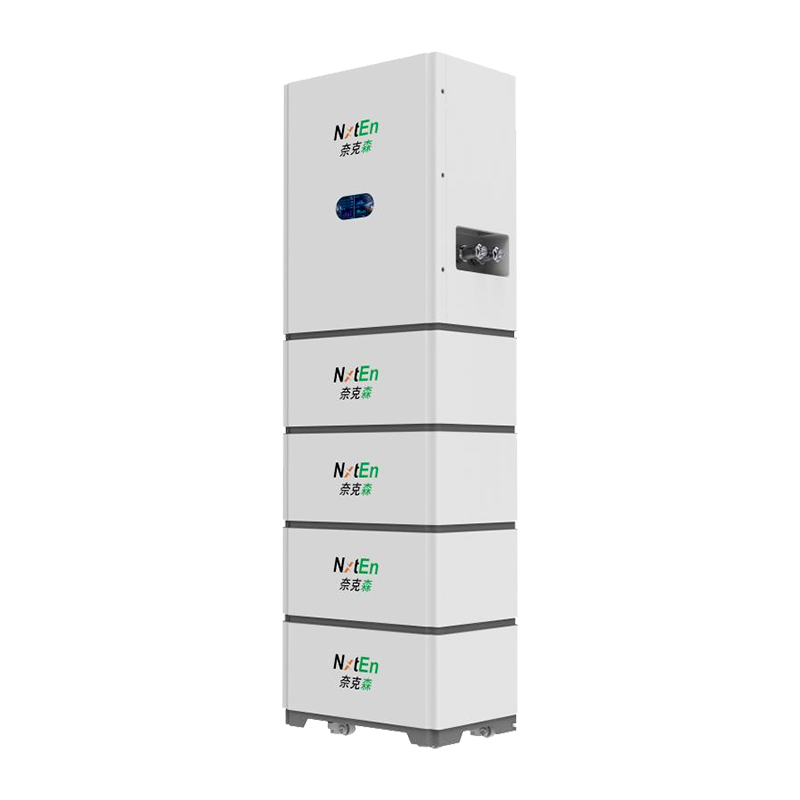
Product Description:
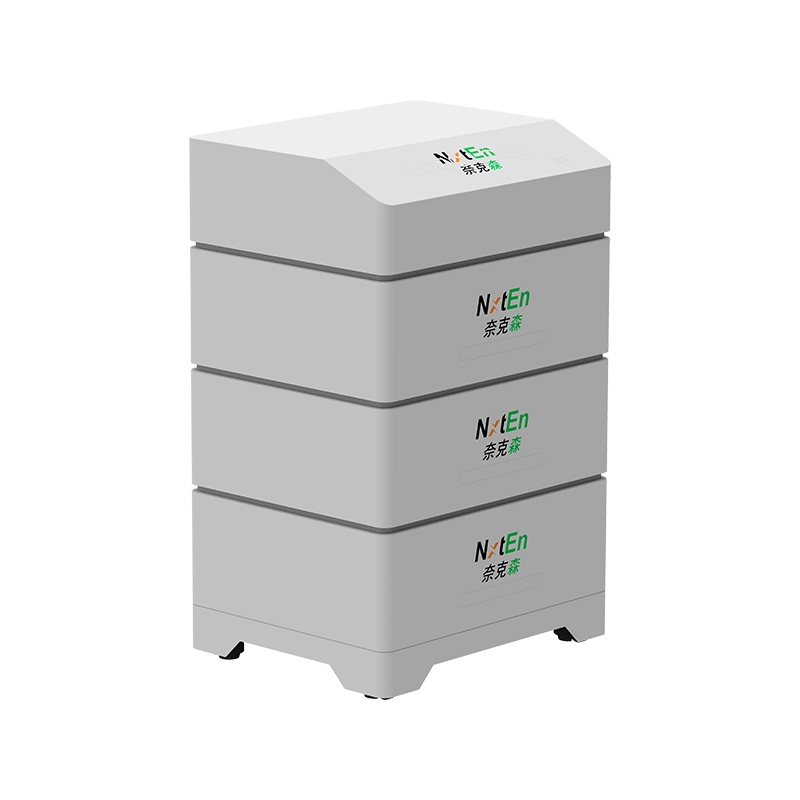
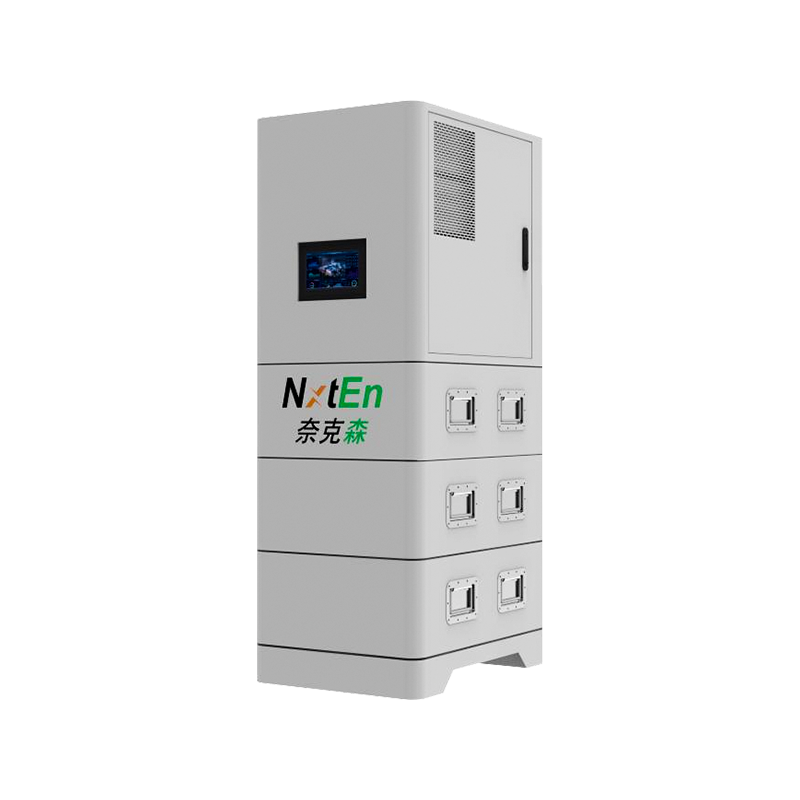
The All-in-One Residential Energy Storage System is an all-in-one cabinet-style product that combines a hybrid inverter with stackable battery modules. This system integrates three key functions: energy conversion, power distribution, and intelligent storage, automatically and efficiently managing the flow of energy between solar power, grid power, and battery storage. The built-in battery supports flexible expansion from a base capacity of 5kWh to 20kWh, adapting to different household power needs and embracing a wide range of applications.
Advantages and Features:
1. Easy Installation
The system integrates the hybrid inverter and battery modules into a single cabinet, eliminating the need for multiple devices, complex wiring, and separate installation spaces. Internal connections and commissioning are completed before shipment, simplifying on-site installation and reducing installation time.
2. Modular and Flexible Expansion
Based on current budgets and electricity usage habits, users can start with a base configuration of 5kWh. As household power needs increase (e.g., by adding an electric vehicle or new appliances), capacity can be easily expanded up to 20kWh by simply adding battery modules.
3. Intelligent Energy Management, Efficient and Autonomous
The system acts like a 24/7 home energy manager, automatically optimizing electricity usage through advanced algorithms. It prioritizes solar power, supplementing it with batteries when needed, and ultimately tapping into the grid's high-priced electricity. In areas with high electricity prices, it automatically charges during off-peak hours and discharges during peak hours, maximizing savings. All decisions are made automatically by the system, requiring no manual intervention, for a truly "set it and forget it" intelligent experience.
4. Voltage Compatibility, Hassle-Free Operation
The built-in hybrid inverter core features intelligent identification and wide voltage compatibility, automatically adapting to and providing stable access to both standard single-phase and more complex three-phase grid environments. This makes it suitable not only for apartments and villas, but also for small businesses and farms.
Application Scenarios:
● Green standard for new homes
● Energy storage upgrade for existing PV systems
● Cost reduction using stored power during peak hours
● Small commercial and off-grid applications
Nxten All-in-One Residential Energy Storage System combines a hybrid inverter with stackable battery storage (5~20kWh capacity) in a single unit. It automatically manages power from solar, grid, and battery sources, providing uninterrupted electricity during outages.
Typical Applications:
● Solar Self-Consumption: Stores excess solar energy during the day for use at night
● Backup Power: Provides an uninterrupted power supply during grid outages
● Peak Shaving: Reduces electricity costs by using stored energy during peak rate periods
● Off-Grid Living: Enables energy independence for remote locations
Features:
● 5kWh modular design for flexible expansion 5kWh
● Automatic identification
● Single & three-phase residential inverter compatible
| Model | NKS HES-17-x-SH (x=n*5) |
NKS HES-20-x-SH (x=n*5) |
NKS HES-25-x-SH (x=n*5) |
NKS HES-30-x-SH (x=n*5) |
| Pack | ||||
| Specifications | 51.2V, 100Ah, 5.12kWh | |||
| Cycle Life(Capacity≥80%) | 6000@100%DOD,RT | |||
| Cluster | ||||
| Rated Voltage | n*51.2V | n*51.2V | n*51.2V | n*51.2V |
| Rated Energy | x=n*5.12kWh | x=n*5.12kWh | x=n*5.12kWh | x=n*5.12kWh |
| Pack Quantity | n=4~13pcs | n=4~13pcs | n=5~13pcs | n=6~13pcs |
| AC Grid | ||||
| AC Voltage | 230/400V(3-phase,Configurable),50/60Hz(Configurable) | |||
| Rated Power | 17kW | 20kW | 25kW | 30kW |
| Charge Overload Capability | 150%kVA | |||
| Discharge Overload Capability | 110%kVA | |||
| Max.Output Current | 30A | 32A | 40A | 48A |
| Current THD | <3% | |||
| Power Factor | 1(±0.8 Adjustable) | |||
| Off Grid | ||||
| Rated Power | 17kVA | 20kVA | 25kVA | 30kVA |
| Rated Output Current | 24.8A | 29A | 36.3A | 43.5A |
| Discharge Overload Capability | 110%kVA @60s | |||
| THDV Voltage Harmonic Distortion(with linear load) | <3% | |||
| Transfer Time | 10ms | |||
|
PV Input |
||||
| Input Voltage Range | 160~1000V | |||
| MPPT Voltage Range | 160~850V | |||
| Full MPPT Range | 500~850V | |||
| Start-up Voltage | 160V | |||
| Max.Input Power | 25.5kW | 30kW | 37.5kW | 45kW |
| Max.Input Current | 32A*2 | 40A*2 | ||
| Short Current | 48A*2 | 60A*2 | ||
|
System |
||||
| Efficiency | 94% | |||
| IP Rating | IP65 | |||
| Dimensions(W*D*H) | 530*340*(n*245+722)±5.When n>4, system can also be connected through external cables and be stacked in multiple columns | |||
| Weight | n*53+63kg | |||
| Communication | CAN/Modbus/WiFi/GPRS/4G | |||
 About Nxten
0㎡

0+

0+

0+
What’S News



An All-in-One Residential Energy Storage System is a compact integrated solution that combines a hybrid inverter, lithium battery modules, and intelligent energy management in a single cabinet. It is designed for home solar backup, energy optimization, and grid independence.
This system integrates energy conversion, distribution, and storage into one unit, improving efficiency and reducing installation complexity by up to 30%–50% compared to traditional split systems.
The All-in-One Residential Energy Storage System is an all-in-one cabinet-style product that combines a hybrid inverter with stackable battery modules. This system integrates three key functions: energy conversion, power distribution, and intelligent storage, automatically and efficiently managing the flow of energy between solar power, grid power, and battery storage. The built-in battery supports flexible expansion from a base capacity of 5kWh to 20kWh, adapting to different household power needs and embracing a wide range of applications.
A 5kWh balcony energy storage system can store enough solar energy to power lighting, WiFi routers, and small appliances for 8–12 hours during peak usage periods.
Compact all-in-one home battery systems are designed for residential users seeking a simplified energy solution. They combine inverter and battery into one unit, reducing installation space and maintenance costs.
| Feature | Specification | Benefit |
|---|---|---|
| System Capacity | 5–20 kWh | Flexible household usage |
| Efficiency | Up to 96% | Minimal energy loss |
| Installation | Single unit design | Fast deployment |
This system is widely used in residential homes, villas, and small commercial buildings. It provides seamless energy management between solar power, grid electricity, and stored energy.
In villa applications, a 10kWh system can reduce grid dependency by 60% or more annually, especially in sunny regions.
Nxten is strategically positioned in China's key energy hub, providing optimal connectivity to global new energy markets. As a professional OEM Residential Energy Storage Pack Manufacturers and ODM Home Energy Storage Pack factory, Our team excels in international trade compliance and cross-border logistics solutions.We operate a fully integrated supply chain, achieving production efficiency gains of 30% and maintaining Six Sigma quality standards. Our IATF 16949 certified manufacturing facilities ensure automotive-grade reliability for all products.The company's in-house R&D center delivers customized energy solutions compliant with UL 1973, IEC 62619, and other key international certifications. Our vertical integration spans from component manufacturing to final product distribution, offering clients single-point accountability.
The global residential energy storage market is expected to exceed 200 GWh annual deployment by 2030, driven by rising electricity prices and solar adoption.
Future systems will focus on AI-driven energy optimization, higher energy density batteries, and ultra-fast switching technologies for seamless power management.
Q1: How long does an all-in-one energy storage system last?
A: Typically 10–15 years depending on usage and battery cycles.
Q2: Can it work without solar panels?
A: Yes, it can store grid electricity and provide backup power.
Q3: Is installation complicated?
A: No, the all-in-one design significantly simplifies installation.
Q4: Can it power an entire house?
A: Yes, depending on system size, it can support full household loads or essential circuits.

 +86-0574-62165160
 +86-18958222822
 No. 95-1, South Guangming Road, Simen Town, Yuyao City, Zhejiang Province, China



 English
 русский