English
 русский
Home / News / Industry News / Battery Series vs Parallel Wiring: Voltage, Capacity and Selection Guide
Industry News

Content
Four 12V 100Ah batteries sit on the workshop floor, and everything that follows depends on one wiring decision. Connect them in series and you have a 48V bank. Connect them in parallel and you have a 12V bank with four times the runtime. The batteries, the cost, and the stored energy are identical either way.
Series wiring adds voltage and keeps amp-hour capacity unchanged. Parallel wiring adds amp-hour capacity and keeps voltage unchanged. Neither arrangement creates extra watt-hours, so the useful question is not which option is stronger, but which one matches the voltage window your inverter, charger, and battery management system (BMS) can accept.
In a series string, the positive terminal of one battery connects to the negative terminal of the next. Current has a single path, so it flows through every battery in turn, and each battery's voltage adds to the total.
Four 12V 100Ah batteries in series produce 48V at 100Ah, or 4.8 kWh of nominal energy. The current is identical at every point in the string, which means cable gauge and fuse ratings are sized for that one value rather than for the sum of the batteries.
Series wiring also happens inside every battery you buy. A 12V lithium unit is four 3.2V cells in series, and a 48V pack is usually 15 or 16 of them. Understanding the string means understanding the product.
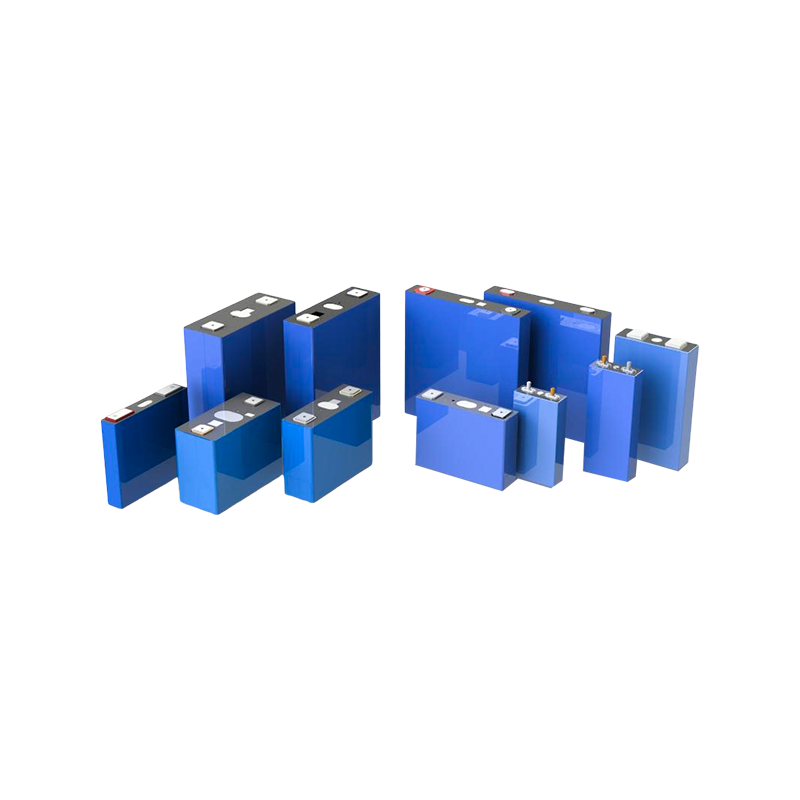
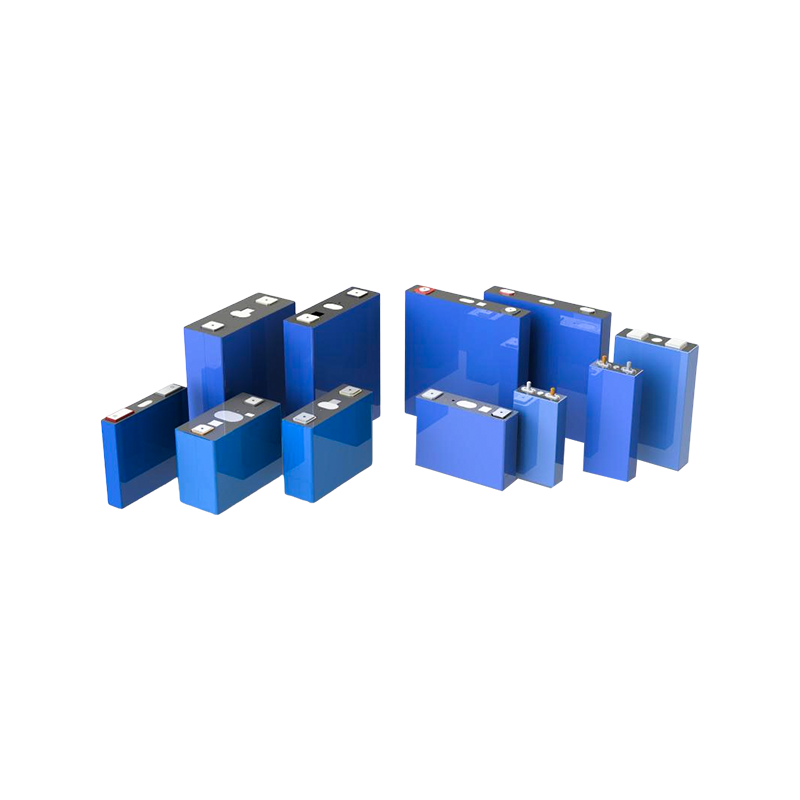 Battery CellsProduct Introduction:View Product →
Parallel wiring connects positive to positive and negative to negative. Every battery sits at the same voltage, and the load current splits across the branches.
Four 12V 100Ah batteries in parallel become 12V at 400Ah, still 4.8 kWh. Runtime at a given load roughly quadruples compared with a single battery, which is why parallel is the standard answer for 12V systems that need to run longer rather than harder.
Fuse each branch separately as well. If one battery fails internally, the remaining three will feed it, and a single bank-level fuse cannot interrupt that path.
The figures below assume identical 12V 100Ah LiFePO4 batteries, charged to the same level and wired with matched cable lengths.
| Configuration | Voltage | Capacity | Energy | Typical Use |
|---|---|---|---|---|
| 2 in series | 24V | 100Ah | 2.4 kWh | Small 24V inverters |
| 2 in parallel | 12V | 200Ah | 2.4 kWh | 12V backup loads |
| 4 in series | 48V | 100Ah | 4.8 kWh | 48V hybrid inverter |
| 4 in parallel | 12V | 400Ah | 4.8 kWh | Long-runtime 12V systems |
| 4 as 2S2P | 24V | 200Ah | 4.8 kWh | Mid-size 24V off-grid |
| 8 as 4S2P | 48V | 200Ah | 9.6 kWh | Residential storage banks |
Most storage projects need voltage and runtime at the same time, so both patterns appear in one bank. Eight 12V 100Ah batteries wired 4S2P give 48V, 200Ah, and 9.6 kWh: two parallel strings, each built from four batteries in series.
The same arithmetic scales down into a single enclosure. A 48V lithium battery is typically 16 LiFePO4 cells in series, since 16 x 3.2V nominal equals 51.2V, which the industry rounds to 48V. Capacity comes from cell size or from adding parallel cells, so a 16S2P pack stores roughly twice the energy of a 16S1P pack at the same voltage.
This is also why the nominal number on the label is not the number your charger uses. A 16S lithium pack charges to about 58.4V at 3.65V per cell, and the charger profile has to reflect the cell count rather than the marketing voltage.
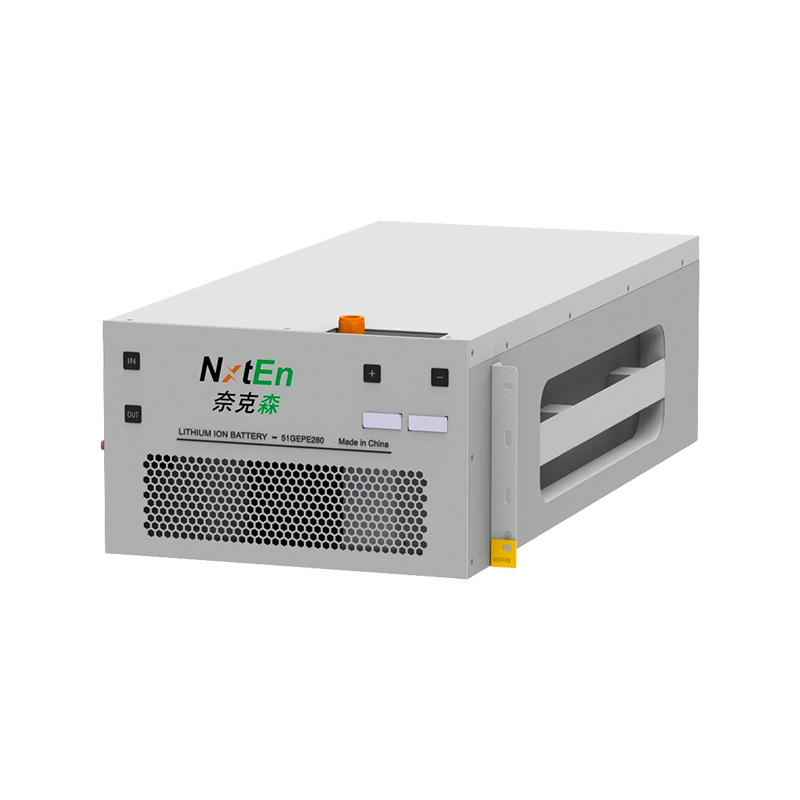
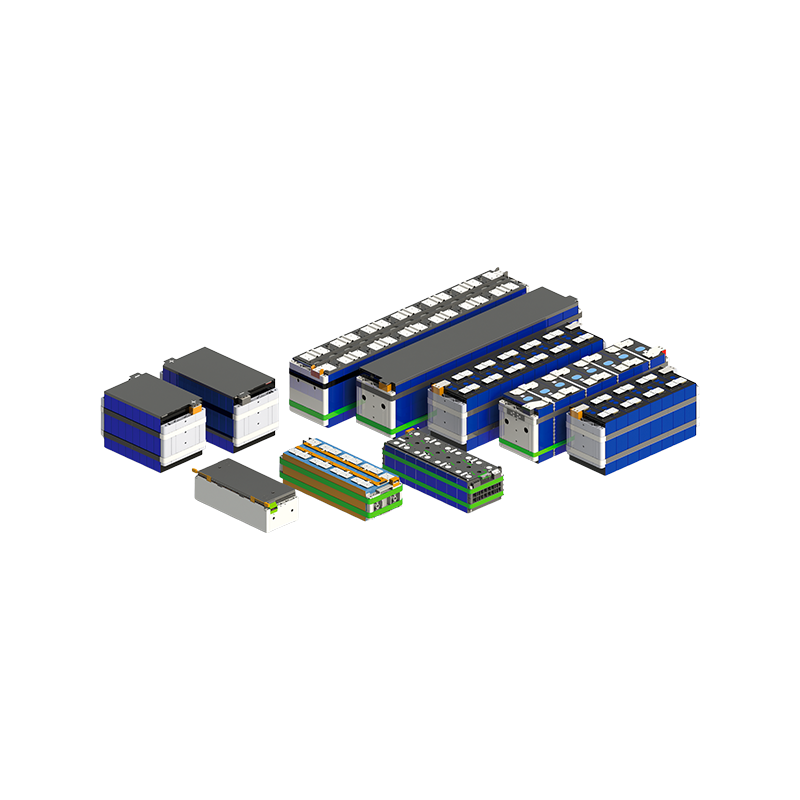 ModulesProduct Introduction: Lithium battery modules combine dozens to hundreds of battery cells in series or parallel, combined with a specialized battery management system ...View Product →
Every cell in a series string carries the same current, so the weakest cell sets the limit for the whole string. Imbalance accumulates cycle after cycle unless the BMS actively balances the cells. Many 12V lithium batteries also cap how many units may be stacked in series, often four, because the internal electronics are not rated for higher voltage.
Parallel banks do not balance themselves either. Differences in cable length, terminal torque, or internal resistance decide which battery works hardest, and that one tends to fail first. A failed cell in one branch also becomes a load the other branches feed, which is why branch-level fusing is not optional.
A series bank must be charged at pack voltage, and the balancing work happens inside the BMS at cell level. Connecting a 12V charger to a 48V string will not move meaningful energy into it.
A parallel bank charges at battery voltage, but the available charge current multiplies with the number of branches. Four batteries in parallel can absorb roughly four times the current of one, which shortens charge time while making the charger's current limit and each battery's C-rate something you check together rather than separately.
If the final configuration is for a home, a factory-built pack removes most of this wiring risk, because the series-parallel arrangement is fixed, balanced, and tested before it ships.
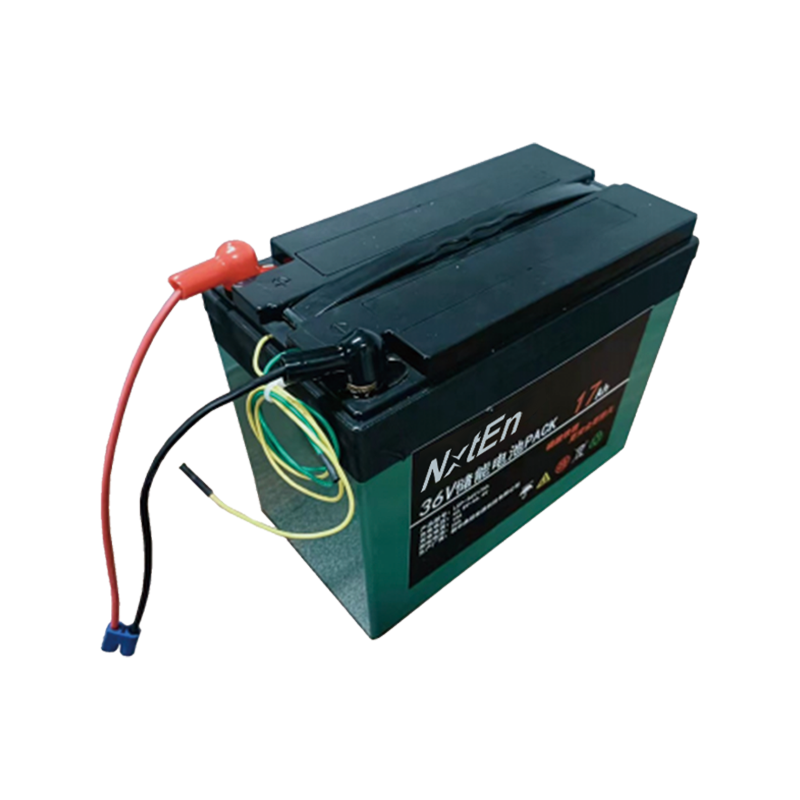
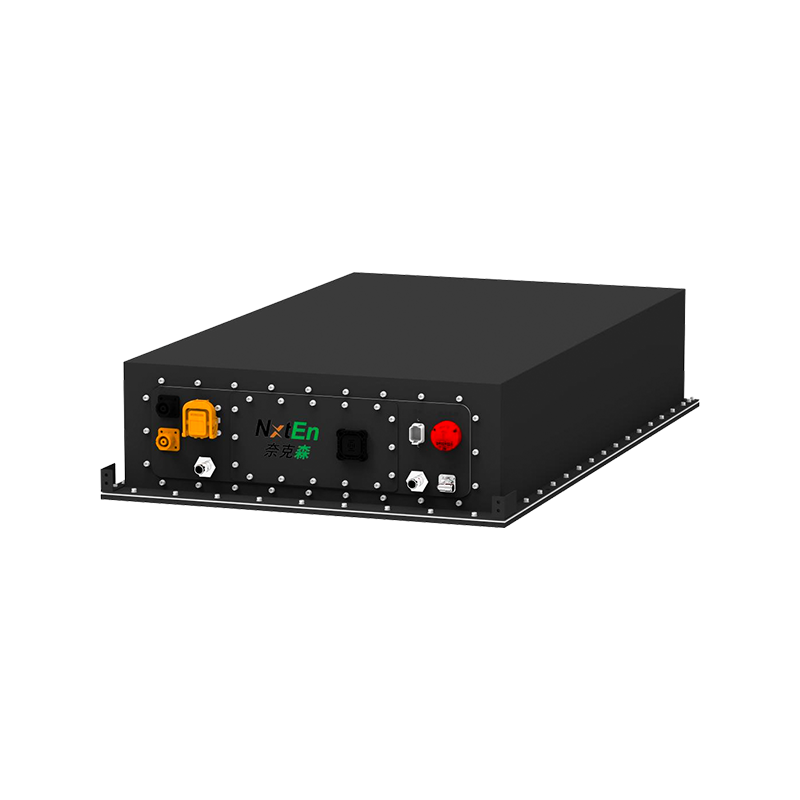
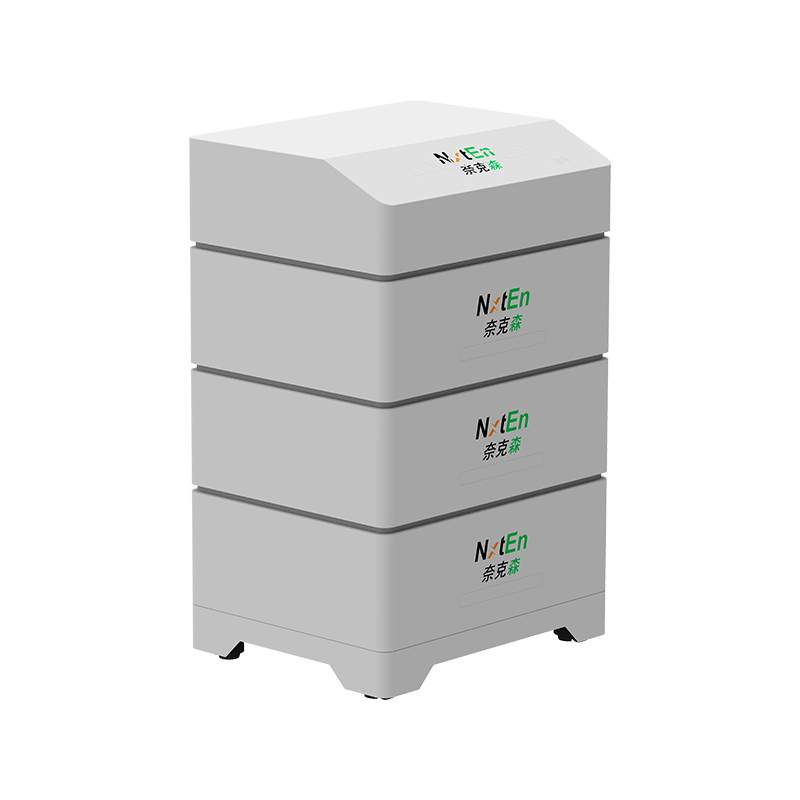 Residential Energy Storage PackProduct Introduction: The residential energy storage battery system is a large-capacity energy storage solution designed specifically for residential applications. It ...View Product →
Wiring choices change heat as well as voltage. A 48V series bank moves the same power at roughly a quarter of the current of a 12V parallel bank, so terminals, busbars, and fuses run cooler for equal output.
Once a bank reaches tens of kilowatt-hours, thermal management starts to matter more than the wiring diagram. Engineers comparing air-cooled and liquid-cooled designs are usually weighing the same trade-off: how evenly heat can be pulled out of the pack against the cost and complexity the cooling loop adds.
Series and parallel are less competing answers than two dials on the same panel. Use series to raise voltage until the inverter is satisfied, then use parallel to raise capacity until the load is covered. Record the final layout, label every cable, and note the state of charge at installation, so the next person who opens the enclosure knows exactly what they are looking at.

 +86-0574-62165160
 +86-18958222822
 No. 95-1, South Guangming Road, Simen Town, Yuyao City, Zhejiang Province, China