

 English
 русский
Home / News / Industry News / Batteries for Wind Power Storage: Sizing, Chemistry, and System Design Guide
Industry News

A 100 MW wind farm on a gusty night can push more electricity into the grid than the system can absorb, so the operator curtails production and clean energy goes to waste. This is not a rare edge case: wind farms routinely face curtailment and ramp penalties during high-output windows. Batteries for wind power storage turn an uncontrollable, intermittent resource into power that can be dispatched on demand, and they respond to grid signals in milliseconds.
The operating principle is simple: charge the battery when wind output exceeds demand, discharge it when output drops or prices rise. The engineering, however, covers chemistry, thermal management, sizing, and grid integration. The sections below explain what matters when specifying a battery system for a wind project, and where buyers commonly make expensive mistakes.
Storage on a wind site is usually justified by one of four jobs, and larger projects combine two or more of them:
The hardware requirement is the same across all four jobs: high round-trip efficiency, long cycle life, and a controller that can act on grid signals within seconds. Well-managed wind-storage hybrids also reduce wider system losses from transmission congestion and reserve requirements; our explainer on how energy storage improves grid efficiency walks through the mechanisms behind that gain.
Wind storage batteries are cycled daily, often more than once per day, for 10–15 years. Not every chemistry survives that duty cycle. The table below summarizes the main technical and economic trade-offs based on typical manufacturer specifications.
| Parameter | LFP | NMC | LTO | Lead-carbon |
|---|---|---|---|---|
| Cycle life at 80% DoD | 6,000–10,000 | 3,000–5,000 | 15,000–20,000 | 1,500–3,000 |
| Round-trip efficiency | 92–95% | 93–96% | 95–97% | 80–85% |
| Response time | Milliseconds | Milliseconds | Milliseconds | Seconds |
| Energy density | Moderate | High | Low | Very low |
| Relative cost per kWh | Mid | Higher | Highest | Lowest |
| Best wind-site fit | Most wind projects | Space-limited sites | High-frequency grid services | Short-duration backup |
LFP is the default chemistry for most wind-storage projects today. It offers 6,000+ cycles at 80% depth of discharge, contains no cobalt, and tolerates sustained daily cycling with predictable degradation. Lower energy density rarely matters on a wind farm, where cabinets can be spread across open ground. NMC fits space-limited sites, but shorter cycle life increases replacement cost over a 15-year horizon. LTO is technically excellent but overpriced unless frequency regulation is the primary revenue stream.
After chemistry, thermal management is the largest controllable factor in battery life. In an air-cooled pack, cells near the cabinet edge run hotter than cells in the middle; a temperature spread above 5 °C accelerates aging in the hottest cells and leaves the whole string limited by its weakest unit.
Liquid cooling holds cell-to-cell temperature differences within 2–3 °C, allows higher sustained C-rates, and slows degradation in hot climates. The trade-off is additional pumps, coolant plates, and maintenance. Before deciding, answer two questions:
For projects that demand high sustained throughput, a liquid-cooled pack is the more predictable choice for lifetime performance.
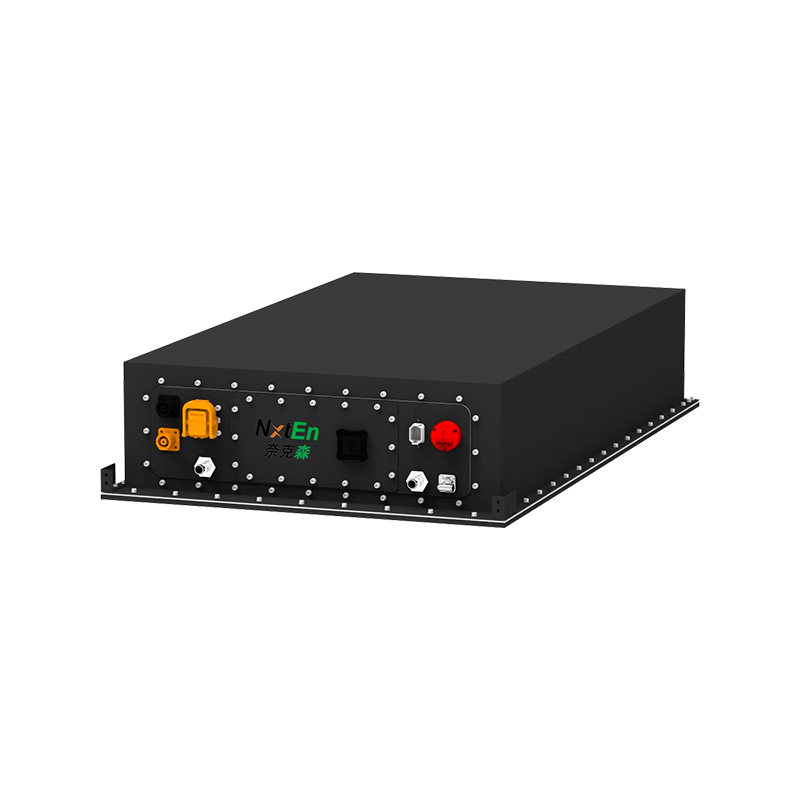 Liquid-Cooled Battery Energy Storage Pack for High-Throughput ApplicationsThis liquid-cooled pack uses sealed coolant circulation to keep cell temperatures uniform, supporting dense cell arrangement and consistent long-term performance. It suits wind farm storage projects needing predictable lifetime throughput and reliable operation in demanding conditions.View Product →
Batteries do not operate in isolation. On a grid-connected wind farm, the storage controller must interface with the turbine SCADA, substation protections, and the grid operator's dispatch signals. On an off-grid wind-diesel site, the battery is the backbone: it absorbs wind variability, keeps diesel generators from running at low load, and provides synthetic inertia to the microgrid.
A complete wind-storage system includes cells, packs, cooling, the power conversion system, an energy management system (EMS), and protection relays. Sourcing all of these from one integrated supplier reduces interface failures and gives you a single point of responsibility during commissioning and warranty claims.
For remote sites and islands where the grid is weak or absent, a pre-integrated off-grid hybrid system combining wind, solar, diesel, and storage in one platform is often the most cost-effective route.
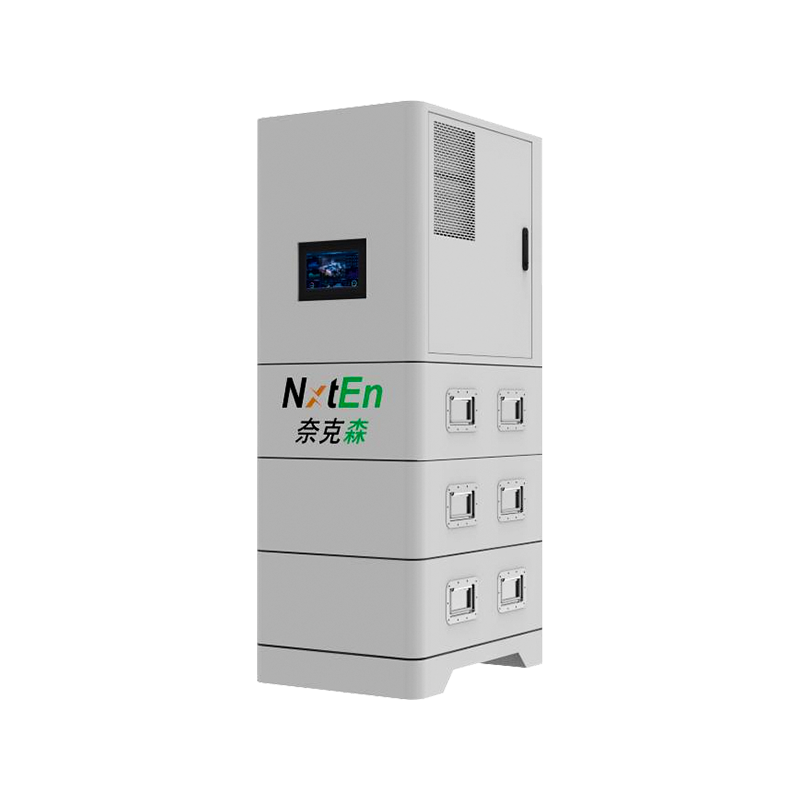 Integrated Off-Grid Hybrid Energy System with Wind, Solar, Diesel, and StorageThis standalone microgrid platform coordinates wind, solar, battery, and diesel generation through intelligent management, aiming to reduce fuel use while providing uninterrupted power. It is a practical choice for remote sites where grid connection is unavailable or weak.View Product →
For retrofitting existing wind farms, containerized storage near the substation with a supervisory controller that reads wind output and price signals in real time usually delivers the fastest return.
Most wind-storage sizing errors come from mismatching power and capacity. A system sized for MWh but not MW will fail to smooth ramps; one sized for MW but not MWh cycles too shallowly and never earns back its capital. As a working rule, size storage to 2–4 hours of the wind farm's rated output for smoothing, and to 15–30% of annual curtailed energy for curtailment recovery, then compare the business case for each figure.
Review warranty conditions as carefully as price. The reliability indicators that matter are:
Battery lifespan depends less on the cells than on how the full system is operated; our guide to battery lifespan and efficiency explains why identical packs can age at completely different rates.
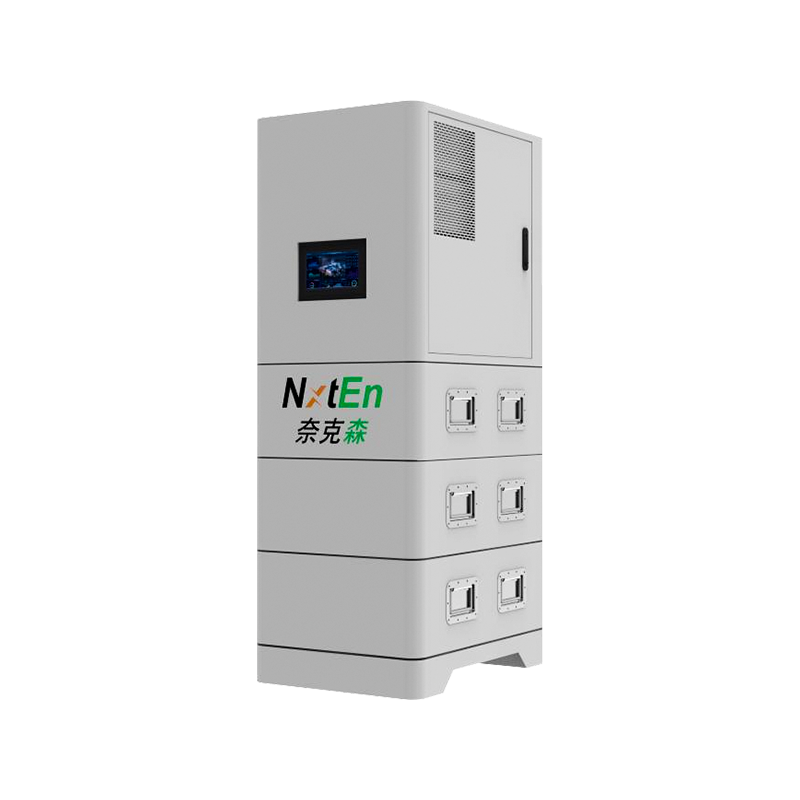
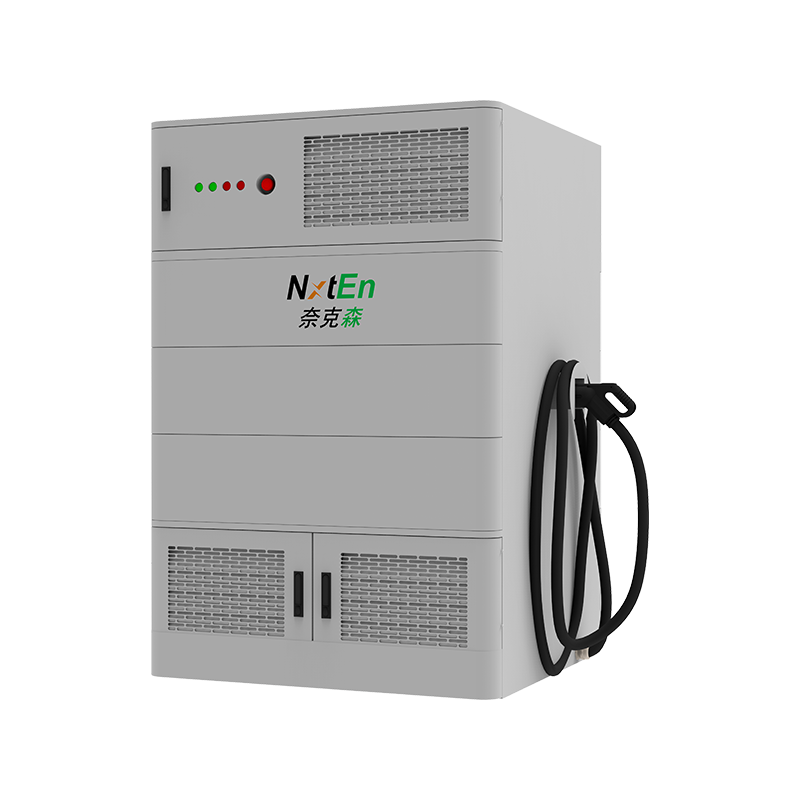
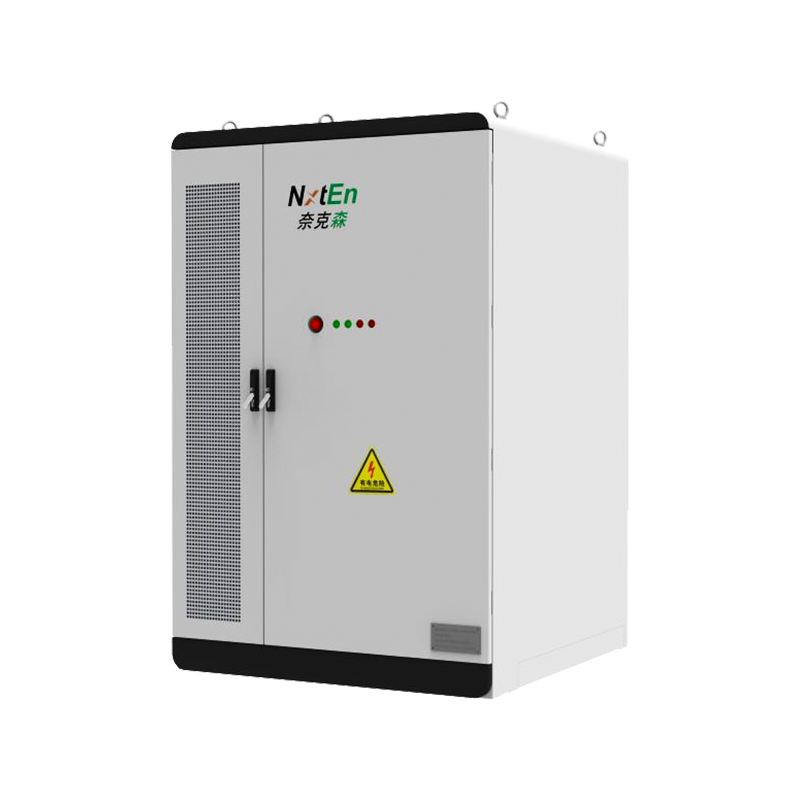
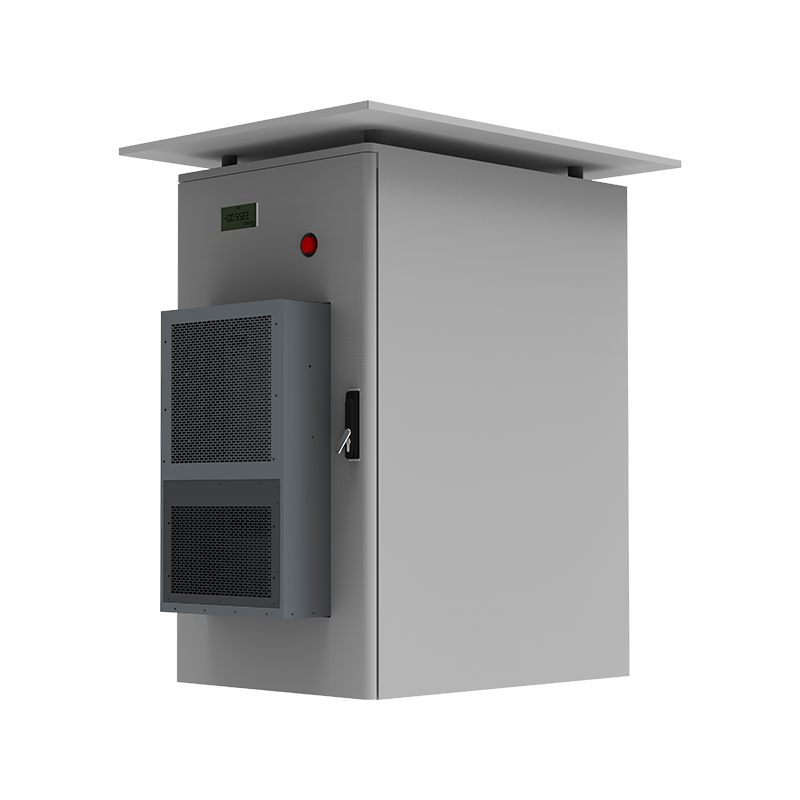
For larger wind-storage blocks in the hundreds of kilowatt-hours, outdoor liquid-cooled storage cabinets offer a pre-engineered building block. Choosing a manufacturer that controls cells, modules, packs, and final integration reduces the number of suppliers you must coordinate when a fault appears.
Buying batteries for wind power storage is an economic decision, not a chemistry exercise. The cheapest battery per kilowatt-hour is rarely the cheapest over a 15-year contract once cycle life, thermal management, and integration cost are factored in. Start with the wind profile, curtailment history, and grid code requirements for your site; then work backward to chemistry, cooling, and sizing. A supplier that controls the entire chain—from cells to modules to packs to complete systems—can provide consistent data and one accountable partner from initial design to commissioning.
When the battery's real behavior must match the datasheet for a decade, that traceability is what ultimately protects your payback period.

 +86-0574-62165160
 +86-18958222822
 No. 95-1, South Guangming Road, Simen Town, Yuyao City, Zhejiang Province, China

