English
 русский
Industry News
To choose the right residential energy storage pack, start by calculating your daily energy consumption, then match a system with sufficient usable capacity, appropriate continuous power output, compatible battery chemistry, and certifications valid in your region. A well-matched Residential Energy Storage Pack can cover 80–100% of a typical household's overnight energy needs while providing seamless backup power during grid outages — but an undersized or poorly specified system will fail to deliver on either promise.
This guide walks through every decision point in sequence, from sizing your energy needs to evaluating safety certifications, so you can make a confident and informed selection.
Step One: Calculate Your Household Energy Requirement
Before comparing any Home Battery Energy Storage System, you need a clear picture of how much energy your household actually uses. Buying on gut feeling or general recommendations leads to either costly oversizing or frustrating undersizing.
How to Calculate Your Daily kWh Consumption
Review your electricity bills for the past 12 months and find the average monthly consumption in kWh. Divide by 30 to get your daily figure. For most households in developed countries, typical daily consumption falls in these ranges:
| Household Size | Typical Daily Use (kWh) | Recommended Usable Capacity | Suggested System Size |
|---|---|---|---|
| 1–2 person apartment | 5–10 kWh | 5–8 kWh | 5–10 kWh nominal |
| 3–4 person family home | 15–25 kWh | 12–20 kWh | 15–25 kWh nominal |
| Large home with EV charging | 30–60 kWh | 25–50 kWh | 30–60 kWh nominal |
Note that nominal capacity and usable capacity are not the same figure. Most lithium-based systems provide 80–90% of nominal capacity as usable energy to protect battery longevity. A 10 kWh nominal system typically delivers 8–9 kWh of usable energy.
Understanding Battery Chemistry: LFP vs. NMC
The chemistry of a Residential Energy Storage Pack determines its safety profile, cycle life, temperature tolerance, and energy density. The two dominant chemistries for home storage are Lithium Iron Phosphate (LFP) and Nickel Manganese Cobalt (NMC), and the difference is significant enough to be a primary selection criterion.
Lithium Iron Phosphate (LFP)
LFP is the leading chemistry for residential applications. It offers 3,000–6,000 charge cycles at 80% depth of discharge, compared to 1,500–2,000 cycles for NMC. It does not undergo thermal runaway under the same conditions as NMC, making it significantly safer for indoor installation. The trade-off is lower energy density — LFP packs are physically larger for the same kWh rating.
Nickel Manganese Cobalt (NMC)
NMC offers higher energy density — useful where installation space is limited — but has a shorter cycle life and requires more sophisticated thermal management. It is better suited to applications where space is the primary constraint and where ambient temperatures are stable and controlled.
| Parameter | LFP Chemistry | NMC Chemistry |
|---|---|---|
| Cycle life (80% DoD) | 3,000–6,000 cycles | 1,500–2,000 cycles |
| Thermal runaway risk | Very low | Moderate |
| Energy density | 90–160 Wh/kg | 150–220 Wh/kg |
| Operating temp range | -20°C to +60°C | -10°C to +50°C |
| Best residential use case | Most homes, outdoor installs | Space-constrained installs |
Power Output: Why Continuous Watt Rating Matters as Much as Capacity
Many buyers focus exclusively on kWh capacity while overlooking the continuous power output rating — a mistake that can render even a correctly sized Home Battery Energy Storage System unable to run critical appliances during an outage.
Capacity (kWh) tells you how long the system can run. Power (kW) tells you what it can run at any given moment. Both constraints must be satisfied simultaneously. Consider this example for a typical family home backup scenario:
- Refrigerator: 150–200 W continuous
- LED lighting (whole home): 200–400 W
- Router and devices: 100–200 W
- Electric oven or induction cooktop: 2,000–3,500 W
- Air conditioner (3.5 kW unit): 1,200–3,500 W at startup
Running essential loads (refrigerator, lighting, devices) requires approximately 500–800 W continuous. If you also want to run an air conditioner or electric cooking during an outage, your system must deliver 5–7 kW continuous power. Many entry-level storage packs are rated at only 3–5 kW continuous output — sufficient for basic backup but unable to support high-draw appliances simultaneously.
Grid-Tied, Off-Grid, and Hybrid: Choosing the Right Operating Mode
The operating mode of your Residential Energy Storage Pack determines how it interacts with the utility grid and your solar panels. Each mode has distinct advantages and is suited to different household priorities:
Grid-Tied with Battery Backup
The most common configuration for grid-connected homes. The battery charges from solar or off-peak grid power and discharges during peak rate hours or grid outages. Time-of-use arbitrage in markets with peak/off-peak rate differentials of 15–25 cents per kWh can recover meaningful value over the system's lifetime.
Off-Grid Storage System
For homes without utility access, an off-grid Residential Backup Power Battery system must be sized to cover multiple days of autonomy — typically 3–5 days of full household consumption — to account for periods of low solar generation. This requires significantly larger battery capacity and a generator backup for extended low-light periods.
Hybrid Systems
Hybrid systems maintain grid connection while maximizing self-consumption of solar energy. They seamlessly switch to battery power during outages and can be configured to export surplus energy to the grid where feed-in tariffs apply. This is the configuration recommended for most new residential solar-plus-storage installations in 2024 and beyond.
Safety Certifications You Must Verify Before Purchase
A Home Battery Energy Storage System installed in or adjacent to a home represents a potential safety risk if the battery management system, cells, or enclosure are substandard. Certification to recognized international standards is a non-negotiable baseline, not an optional feature.
- UL 1973: The primary U.S. standard for stationary battery energy storage systems. Required for most utility rebate programs and insurance policies in North America.
- IEC 62619: The international standard for secondary lithium cells and batteries used in stationary applications. Required for European markets and widely recognized globally.
- UN 38.3: Transportation safety certification — relevant when evaluating supply chain integrity and whether the manufacturer meets baseline cell quality standards.
- CE Marking: Required for all products sold in the European Economic Area, confirming compliance with relevant EU directives including the Low Voltage Directive and EMC Directive.
- IATF 16949 / ISO 9001: Quality management system certifications for the manufacturing facility — an indirect but meaningful indicator of production consistency and defect control.
Always request and verify certification documentation directly rather than relying on claims in marketing materials. A legitimate manufacturer will readily supply third-party test reports for the specific product model you are purchasing.
Warranty, Cycle Life, and Long-Term Value Assessment
A Residential Backup Power Battery is a long-term infrastructure investment. The warranty structure and cycle life specification directly determine the total value delivered over the system's operating life.
What a Good Warranty Covers
Industry-standard warranties for residential storage systems provide 10 years or 4,000 cycles (whichever comes first), with a guaranteed end-of-warranty capacity of at least 70% of original usable capacity. Warranties that cover only defects in materials and workmanship — but not capacity degradation — offer significantly less protection.
Calculating Cost Per kWh Delivered Over System Lifetime
A simple way to compare systems objectively is to calculate the cost per kWh of energy delivered over the system's warranted lifetime. Divide the total system cost by the total lifetime energy throughput:
Example: A 10 kWh system with 4,000 warranted cycles at 80% usable capacity delivers 10 × 0.8 × 4,000 = 32,000 kWh of lifetime throughput. This metric allows direct, chemistry-agnostic comparison between competing systems.
Installation Requirements and Smart Integration Features
Even a correctly specified Residential Energy Storage Pack will underperform if installation requirements are not met. Evaluate these practical factors before finalizing your selection:
- Indoor vs. outdoor rated enclosure: Systems intended for garage or outdoor installation must carry an IP55 or higher ingress protection rating. Indoor units may have lower IP ratings but require adequate ventilation space.
- Operating temperature range: If your installation site experiences temperatures below 0°C, confirm the system includes battery heating to maintain charging capability in cold conditions. Many systems will not charge below 0°C without internal heating.
- Scalability: A modular system that allows additional battery packs to be added later provides flexibility as your energy needs grow — for example, when adding an EV or expanding solar capacity.
- Smart monitoring and remote management: Systems with Wi-Fi or Ethernet connectivity allow real-time energy flow monitoring, remote configuration, and over-the-air firmware updates. This is increasingly important for optimizing time-of-use charging strategies.
- Inverter integration: Confirm whether the storage system includes an integrated inverter (all-in-one system) or requires a separate compatible inverter. All-in-one systems simplify installation but limit future inverter upgrades.
About Nxten
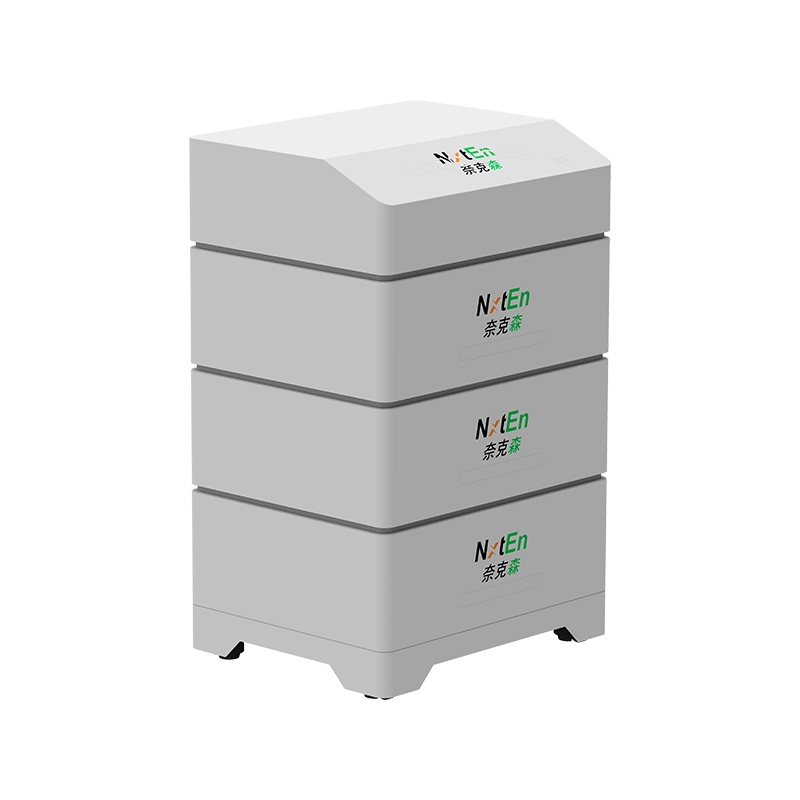
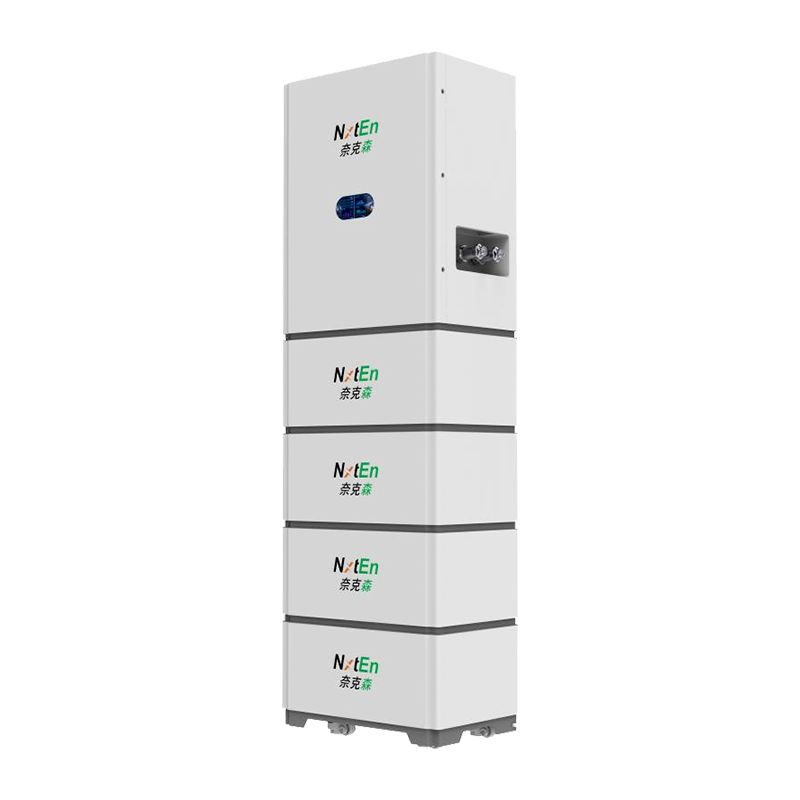
Nxten is strategically positioned in China's key energy hub, providing optimal connectivity to global new energy markets. As a professional OEM Residential Energy Storage Pack Manufacturer and ODM Home Battery Energy Storage System Factory, Nxten's team excels in international trade compliance and cross-border logistics solutions.
Nxten operates a fully integrated supply chain, achieving production efficiency gains of 30% and maintaining Six Sigma quality standards. Its IATF 16949 certified manufacturing facilities ensure automotive-grade reliability across all products. The company's in-house R&D center delivers customized energy solutions compliant with UL 1973, IEC 62619, and other key international certifications.
Nxten's vertical integration spans from component manufacturing to final product distribution, offering clients single-point accountability across the entire product lifecycle — from initial specification through to after-sales support.