English
 русский
Home / News / Industry News / Definition of bess: Applications, Selection Criteria, and Practical Guidance
Industry News

Content
Your supplier's datasheet says 215 kWh and liquid-cooled; the tender simply says "BESS". Those two documents are not yet describing the same thing. The working definition of BESS is a battery energy storage system: batteries, power conversion, thermal management and controls assembled so the unit can charge from a grid or renewable source, hold that energy, and discharge it on demand. Chemistry, enclosure, cooling method and rack count describe how one particular unit is built. They do not change what the category is. That distinction matters at quotation stage, because most pricing surprises in storage projects come from comparing a system offer against a component offer without noticing the swap.
A BESS is defined by three capabilities performed at scale: charge, hold, and discharge on command. If a product can take electrical energy from an external source, keep it available, and deliver it back when a controller asks for it, it is a battery energy storage system. If any one of those three is missing, it is something else.
This is why the word "system" carries more weight than the word "battery". A lithium battery pack with an enclosure and a BMS stores energy well, but on its own it has no path back into a building's AC wiring, so it is a component. A standby generator delivers power on demand but stores fuel, not electricity. An uninterruptible power supply does store electricity, yet its definition is built around minutes of ride-through for critical loads rather than shifting energy across a day.
For procurement, the practical consequence is short: write the definition into the RFQ. Specify usable energy in kWh, continuous power in kW, duration at rated power, and the response time you expect from the controller. Without those four lines, offers that look comparable can differ by 30% to 40% once cooling, auxiliaries and depth of discharge are priced in.
A definition only becomes useful when you can check it against hardware. Every system, from a 10 kWh home unit to a 400 kWh outdoor cabinet, resolves into the same four layers.
Cells store the charge; modules group them into serviceable blocks. Chemistry sets the baseline. LFP is the common choice for stationary storage because of cycle life and thermal stability, while NMC packs more energy per kilogram. Ask for cycle count measured to 80% state of health rather than the headline cycle figure on the brochure.
The BMS monitors cell voltage and temperature, balances the string, and trips protection before a cell is pushed past its limits. Trip thresholds, balancing method and communication protocol belong in the technical annex, not in a verbal promise.
The PCS turns DC into AC and back again. Its efficiency curve and grid-code certification decide whether the system can legally connect where you plan to install it, and at what power level.
The EMS decides when to charge and discharge. Take it away and the hardware becomes a battery bank operated by hand on a schedule.
| Layer | Job in the system | What to verify in writing |
|---|---|---|
| Cells and modules | Store the charge, set cycle life | Chemistry, nominal capacity, cycles to 80% SOH |
| BMS | Protect cells, balance, report | Trip points, balancing method, protocol |
| PCS | Convert DC to AC and back | Rated kW, efficiency curve, grid-code certificate |
| EMS | Schedule charge and discharge | Dispatch modes, remote access, data retention |
The same four-step cycle repeats whether the system serves a house or a factory campus.
Round-trip efficiency for a modern lithium system typically lands between 85% and 95%, so every 100 kWh put in returns 85 to 95 kWh. That single figure explains why storage economics are calculated on throughput rather than on nameplate capacity.
Most confusion in early meetings comes from four terms used interchangeably. They are not interchangeable, and the table below shows where each definition ends.
| Term | What it actually is | Where the definition stops |
|---|---|---|
| Battery pack | Cells, modules, enclosure, sometimes a BMS | No grid interface, no dispatch logic |
| UPS | Battery plus inverter for short ride-through | Autonomy of minutes, not daily energy shifting |
| Generator | Converts fuel into electricity on site | Stores fuel, never stores electricity |
| BESS | Batteries, PCS, EMS and thermal management | Full cycle, measurable efficiency and response time |
The core definition does not change, but the detail that decides whether a project works does.
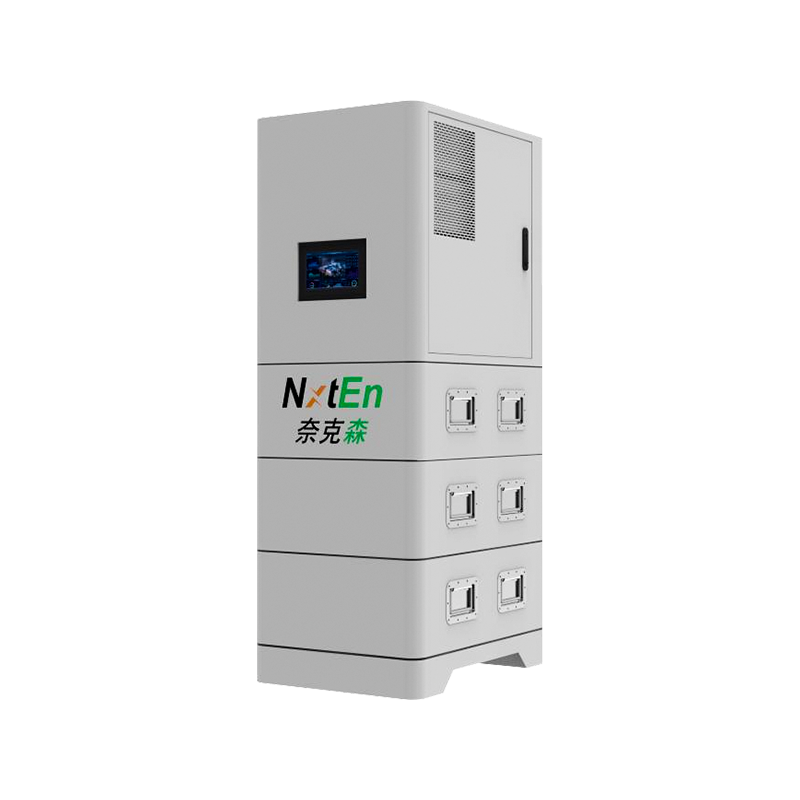
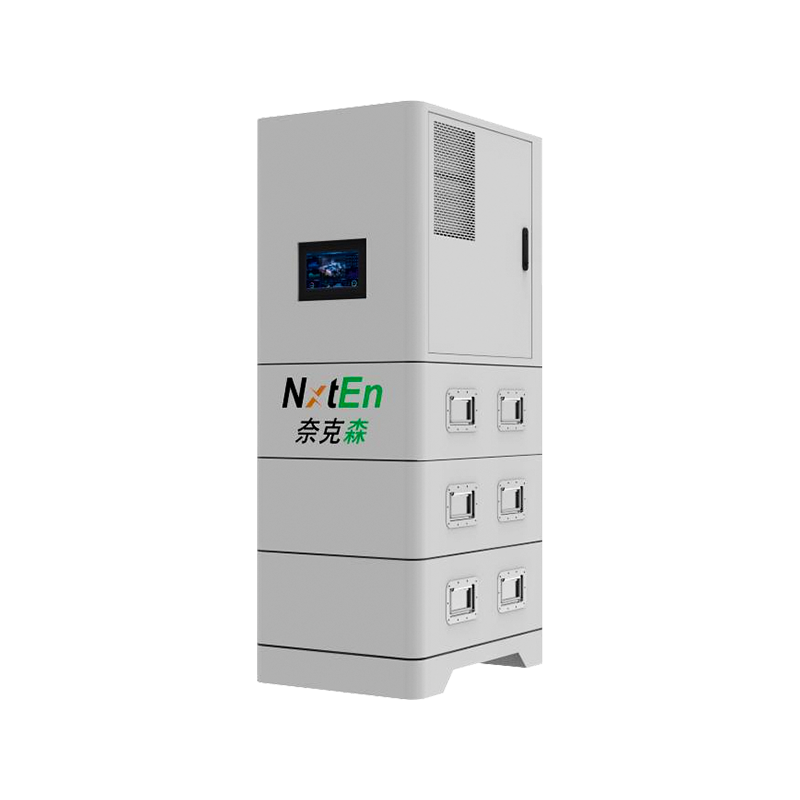
A home system is defined by a small energy envelope and one clear decision: back up essential loads, or store rooftop solar for the evening. Capacity clusters between 5 and 20 kWh on a single-phase connection. What separates a good installation from a frustrating one is the backup transfer time and whether the EMS can be reprogrammed later without sending an engineer to site.
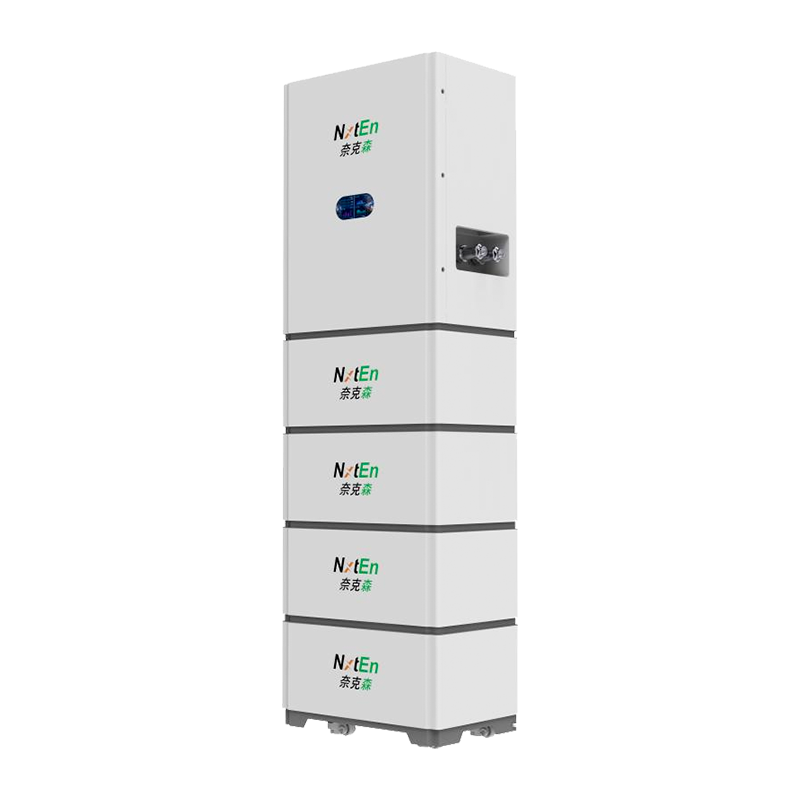 All-in-One Residential Energy Storage System, 5–20 kWhA cabinet-style hybrid inverter and stackable battery system for home solar self-consumption, backup power, and modular capacity expansion.View Product →
From roughly 200 kWh upward, the definition expands to thermal strategy, enclosure rating, fire detection and suppression, plus siting questions such as clearance, noise and cable routing. Cooling choice is not cosmetic, because it sets footprint, auxiliary power draw and the achievable charge rate. It is worth reviewing the trade-offs in air-cooled and liquid-cooled designs before the specification is frozen.
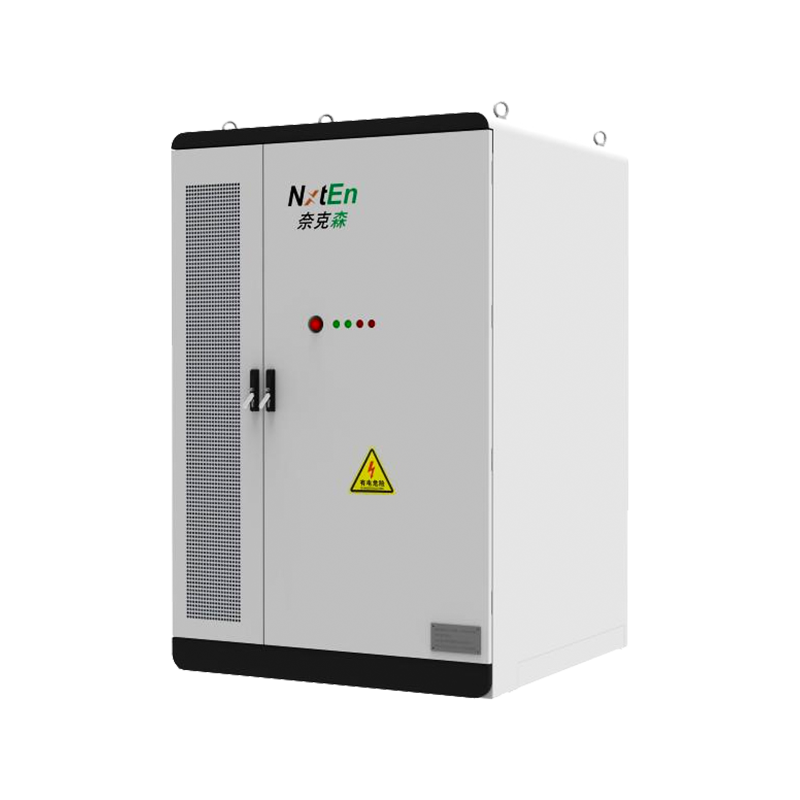 Liquid-Cooled Outdoor Commercial Energy Storage Cabinet, 215/233 kWhIntegrated LFP cabinet with liquid thermal management, PCS and EMS for C&I peak shaving, backup, and grid services.View Product →
Where no reliable grid exists, the definition has to include the other sources. A hybrid system dispatches wind, PV, diesel and storage together, so the EMS rather than the battery becomes the item under the most scrutiny. Sizing starts from the worst week of the year, not from an average day.
 Off-Grid Wind-Solar-Diesel-Storage Hybrid Energy SystemA 20 kW standalone microgrid with PV, wind, battery, and diesel inputs, designed for remote sites and critical backup loads.View Product →
Five figures settle most technical arguments before they start.
Convert the definition into acceptance criteria while the commercial discussion is still open.
The definition of BESS fits in a sentence, but that sentence is really a specification: batteries, conversion, thermal management and controls, working as one unit that charges, holds and discharges on command. Compare offers against those four layers, the usable numbers and the warranty behind them, and the acronym stops being a brochure word. If you would like to see how the layers come together from cell to cabinet, take a look at the energy storage systems we build.

 +86-0574-62165160
 +86-18958222822
 No. 95-1, South Guangming Road, Simen Town, Yuyao City, Zhejiang Province, China