English
 русский
Industry News
The short answer: portable energy storage packs deliver reliable, silent, and emission-free power anywhere — something traditional fuel generators simply cannot match. A recent survey of outdoor enthusiasts found that 85% of frequent campers have transitioned to a portable power station or camping battery generator in the past two years, driven by rising fuel costs, stricter campsite noise regulations, and the widespread adoption of solar-compatible devices. This article breaks down exactly why the shift is happening, what to look for, and how to choose the right outdoor portable power supply for your needs.
The Core Problem Campers Are Solving
Modern camping is no longer a purely analog experience. Campers routinely carry CPAP machines, electric coolers, camera batteries, GPS devices, lighting systems, and communication equipment. Keeping all these devices powered over a multi-day trip with a mix of disposable batteries and a loud gasoline generator is expensive, inconvenient, and increasingly prohibited at many campgrounds.
A camping energy storage pack consolidates all power needs into one compact unit. With capacities ranging from 1 kWh to 2 kWh, a single pack can run a portable fridge for 24–48 hours, charge a laptop more than 15 times, or power LED camp lighting for an entire week — without a drop of fuel.
What Makes a Portable Energy Storage Pack Different from a Standard Power Bank
Many consumers confuse small USB power banks with true portable energy storage packs. The distinction matters enormously in the field.
| Feature | USB Power Bank | Portable Energy Storage Pack |
|---|---|---|
| Typical Capacity | 10–30 Wh | 1,000–2,000 Wh |
| AC Output | No | Yes (110V/220V) |
| Solar Charging | Rarely | Yes (MPPT supported) |
| Zero-Power Shutdown | No | Yes |
| Appliance Support | Phones, earbuds | Fridges, CPAP, power tools |
The AC/DC dual output capability is the critical differentiator. It allows the pack to function as a true camping battery generator, powering household-style appliances without requiring an adapter or voltage converter.
Solar Charging: The Game-Changer for Extended Trips
The integration of solar panel compatibility has fundamentally changed what "off-grid" means. A solar backup power pack paired with a 200W folding solar panel can recover up to 60–80% of a 1 kWh pack's capacity in a single sunny day. For trips lasting longer than 3 days, this effectively makes the power supply self-sustaining in most climates.
Key advantages of solar integration in an outdoor portable power supply:
- Eliminates dependence on grid access or fuel resupply
- Reduces the total cost of power to near-zero on multi-day excursions
- Zero noise and zero emissions — fully compliant with national park regulations
- High-efficiency MPPT charging controllers maximize energy harvested in partial cloud cover
- Supports a genuinely sustainable, low-impact camping footprint
Estimated Daily Solar Recovery (1 kWh Pack, 6 Peak Sun Hours)
100W Panel~36%
200W Panel~72%
300W Panel~100%+
Chart 1: Solar panel wattage vs. daily recovery rate for a 1 kWh portable energy storage pack
Beyond Camping: Emergency Power and Backup Applications
The same unit that powers your campsite serves an equally critical function at home. Emergency energy storage systems have seen a sharp increase in demand following major weather events — FEMA data shows that power outages lasting more than 8 hours affect over 20 million U.S. households annually. A 2 kWh backup power unit can keep a refrigerator running for over 24 hours, maintain phone and internet devices for several days, and power medical equipment through short outages.
The zero-power shutdown technology in advanced packs is particularly important for emergency preparedness. Traditional lithium batteries can lose 15–30% of charge during 6 months of storage; zero-power shutdown minimizes this loss, ensuring the unit is ready when disaster strikes — without monthly top-up charging rituals.
Common emergency backup use cases:
- Home power outage: Refrigerator, router, lighting, phone charging
- Medical: CPAP, nebulizer, insulin refrigeration
- Remote work: Laptop, monitor, router during grid failures
- Construction sites: Power tools, lighting in areas without grid access
- Vehicles / RVs: Supplemental power for overnight stays
How to Choose the Right Camping Energy Storage Pack
Not every pack is suited for every use case. The following framework helps narrow the choice:
Step 1 — Calculate Your Daily Power Budget
Add up the wattage of every device you plan to run, multiply by hours of use per day, and factor in an efficiency buffer of 20% to account for inverter losses and battery discharge curves. A typical family camping setup runs 400–600 Wh per day; a solo traveler may use as little as 150 Wh.
Step 2 — Match Capacity to Trip Duration
For weekend trips (2 nights) without solar, a 1 kWh portable power station is typically sufficient. For week-long expeditions, a 2 kWh unit paired with a 200W solar panel eliminates any range anxiety.
Step 3 — Verify Output Types
Ensure the pack offers pure sine wave AC output for sensitive electronics like CPAP machines and laptops. DC outputs (12V car socket, USB-A, USB-C PD) should cover all your low-power devices simultaneously without a reduction in AC availability.
Step 4 — Check Certifications
A trustworthy emergency energy storage system should carry UL 1973, IEC 62619, and where relevant, UN 38.3 for transport safety. These certifications confirm the battery management system (BMS) meets international safety standards for thermal management, overcharge protection, and short-circuit prevention.
Adoption Trend: Why Demand Is Growing Year Over Year
The global portable power station market was valued at approximately USD 3.4 billion in 2023 and is projected to exceed USD 10 billion by 2030, growing at a CAGR of roughly 17%. Three structural factors are driving this growth:
Portable Power Station Global Market Size (USD Billion, Estimated)
$2.1B
2021
$2.8B
2022
$3.4B
2023
$5.0B
2025E
$10B+
2030P
Chart 2: Estimated global market growth for portable energy storage pack and power station segment
- Grid unreliability: Extreme weather events have made residential backup power a mainstream necessity rather than a luxury.
- Falling lithium cell costs: Battery pack costs dropped by over 89% between 2010 and 2023 (BloombergNEF), making high-capacity units accessible to everyday consumers.
- Remote work and outdoor lifestyle growth: Post-2020, a significant portion of the workforce operates remotely, increasing demand for reliable power away from traditional offices.
About Nxten — Our Portable Energy Storage Solutions
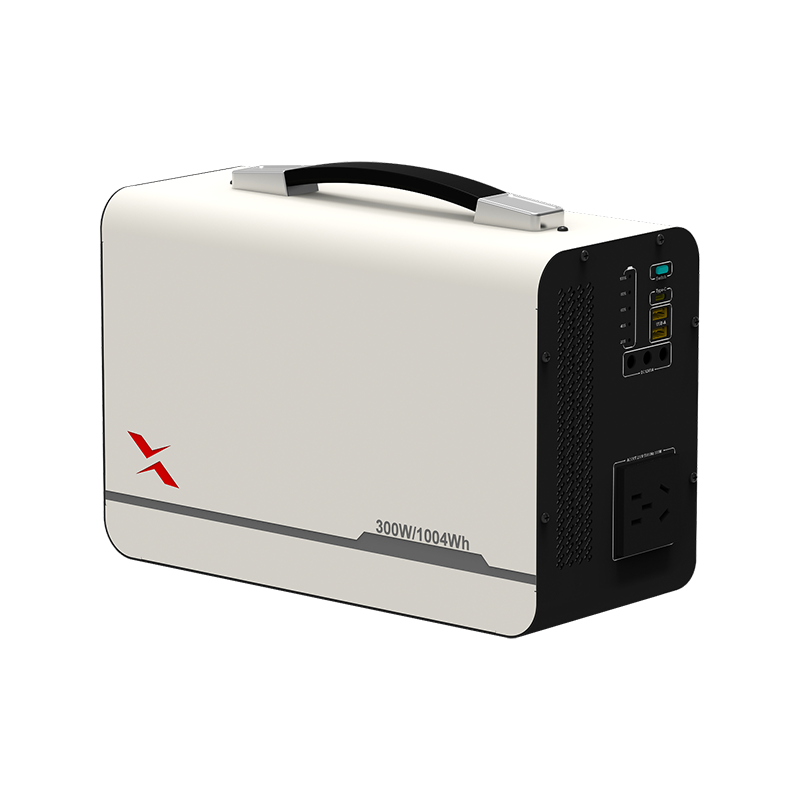
The portable energy storage pack is a mobile power system featuring a built-in high-energy-density lithium-ion battery with full AC/DC output capabilities. With a capacity of 1–2 kWh, each unit delivers substantial energy storage in a lightweight, portable form factor. Every pack supports external solar panel charging to harness clean solar energy, and incorporates zero-power shutdown technology that minimizes standby loss — ensuring the unit retains its full charge even after months of storage.
Ningbo Nxten Energy Technology Co., Ltd. is strategically positioned in China's key energy manufacturing hub, providing direct connectivity to global new energy supply chains. As a professional OEM portable energy storage pack manufacturer and ODM backup emergency power factory, the Nxten team excels in international trade compliance and cross-border logistics. The company operates a fully integrated supply chain achieving 30% production efficiency gains while maintaining Six Sigma quality standards.
Nxten's IATF 16949 certified manufacturing facilities deliver automotive-grade reliability across all product lines. The in-house R&D center develops customized energy solutions fully compliant with UL 1973, IEC 62619, and other key international certifications. Vertical integration — from component manufacturing to final product distribution — ensures single-point accountability for every client project.
Frequently Asked Questions
Q1: How long does a portable energy storage pack last on a single charge?
Runtime depends on the devices connected. A 1 kWh pack can power a 50W portable fridge for approximately 16–18 hours, charge a smartphone over 60 times, or run a 20W LED lighting setup for 40+ hours. Pairing with a solar panel extends this indefinitely under adequate sunlight.
Q2: Is a portable power station safe to use indoors?
Yes. Unlike gasoline generators, a portable energy storage pack produces zero emissions and operates silently, making it completely safe for indoor use in homes, tents, vehicles, and enclosed spaces. Units certified to UL 1973 and IEC 62619 include comprehensive battery management systems (BMS) to prevent overheating and overcharging.
Q3: How many charge cycles does the battery support?
High-quality lithium iron phosphate (LiFePO4) cells used in advanced packs typically support 2,000–3,500 charge cycles to 80% capacity — equivalent to nearly a decade of daily use. Standard lithium-ion packs average 500–1,000 cycles. Always verify the cell chemistry and cycle rating before purchasing.
Q4: Can I take a portable energy storage pack on an airplane?
Most airlines follow IATA regulations capping carry-on lithium batteries at 100 Wh (with airline approval up to 160 Wh). Units of 1 kWh and above are generally not permitted in aircraft cabins or cargo. For travel by road, rail, or sea, no special restrictions typically apply. Confirm with your carrier before traveling.
Q5: What solar panel wattage is recommended for a 1–2 kWh camping energy storage pack?
A 200W panel is the most practical choice for a 1 kWh pack, delivering near-full recovery on a clear day with 6 peak sun hours. For a 2 kWh pack or faster recharge targets, two 200W panels connected in parallel is recommended. Ensure the pack's maximum solar input rating matches or exceeds the combined panel output to avoid throttling.